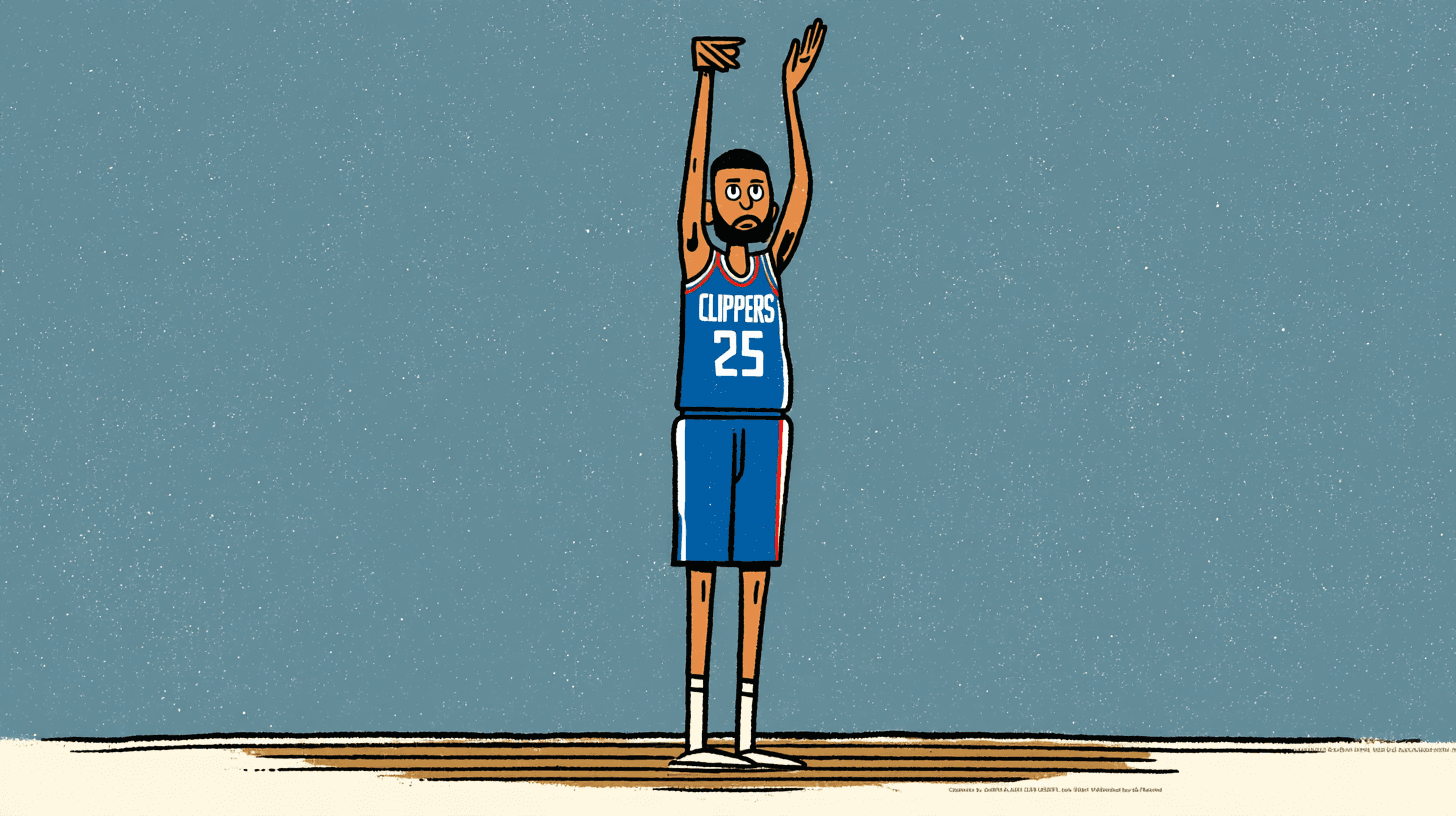
The NBA closed its file on the Clippers and Kawhi Leonard, and within a few hours the story stopped being the ruling and became the reporting on the ruling. A Sports Illustrated columnist went after ESPN in language one shop almost never uses about another, saying they just swallowed a big bunch of bull. That is not a nitpick over a paragraph. That is one writer accusing a network of printing the league's homework with the league's name scratched off it.
So the Clippers Kawhi Leonard verdict is final and the argument is not, which is a strange and very modern place for a basketball story to land.
Let me say the honest part up front, because it matters here more than usual: I do not have the full text of the league's findings in front of me, and I am not going to characterize a document I have not read. What I can tell you is what happened in public, and what it looks like from a desk that has watched leagues grade their own papers before.
What did the NBA decide in the Clippers Kawhi Leonard verdict?
The league ran its review and issued a final verdict. That is the fact on the table. What is in dispute, loudly, is whether the version of that verdict that reached the public was reporting or dictation. Strip the profanity out of the SI complaint and you get a plain accusation: a national outlet took the league's framing, ran it whole, and called it journalism.
That is a serious charge. It is also, notably, not a charge anyone made anonymously. He put his name on it. That is a tell about how confident he feels.
Why the coverage fight matters more than the verdict
Because first versions stick. A league office that finishes an investigation controls two things: what the finding says, and who hears it first. The outlet that gets the early call inherits the framing, and the framing becomes the memory. Second-day reporting almost never catches first-day reporting. It just files quietly behind it.
Checked the almanac on this one. Back in 2000 the league found that Minnesota had cut a secret side agreement with Joe Smith, and the response was not a shrug: the contract was voided, the Wolves were fined millions, first-round picks were taken away, and people at the top of that organization were suspended. Cap integrity cases are not paperwork disputes to the league. They are existential. Which is exactly why the public accounting of one deserves more than a single sourced summary that everybody reprints by lunch.
And here is the small absurdity of the day. The same morning a three-time All-Star in Ben Simmons agreed to a one-year, $3.5 million deal to join the Kings, a genuine basketball story with an actual roster consequence, the loudest fight in the sport was two media companies arguing about who got spun. The season has not tipped and we are already scouting bylines instead of rotations.
What comes next for the Clippers and Kawhi
For the organization, closure on paper is not closure in the building. A finding that arrives contested tends to follow a team into arenas on the road, into pregame availabilities, into every national broadcast that needs a storyline in the second quarter. Players get asked. Coaches get asked. Somebody eventually answers badly and we go again.
For Kawhi, who has never once volunteered a syllable he did not have to, the noise sits outside a door he simply does not open. That has been true for a decade and I do not expect this to be the week it changes.
For the press, the real test is dull and unglamorous: does anyone publish the underlying findings in full, or do we all live off a paraphrase of a paraphrase? A columnist yelling about it is not accountability. Documents are accountability.
What I am watching next is whether the full findings ever surface in public, and whether the outlet that got the first call comes back with a follow-up that adds something instead of defending something. One of those would settle this. The other would just make it louder.