
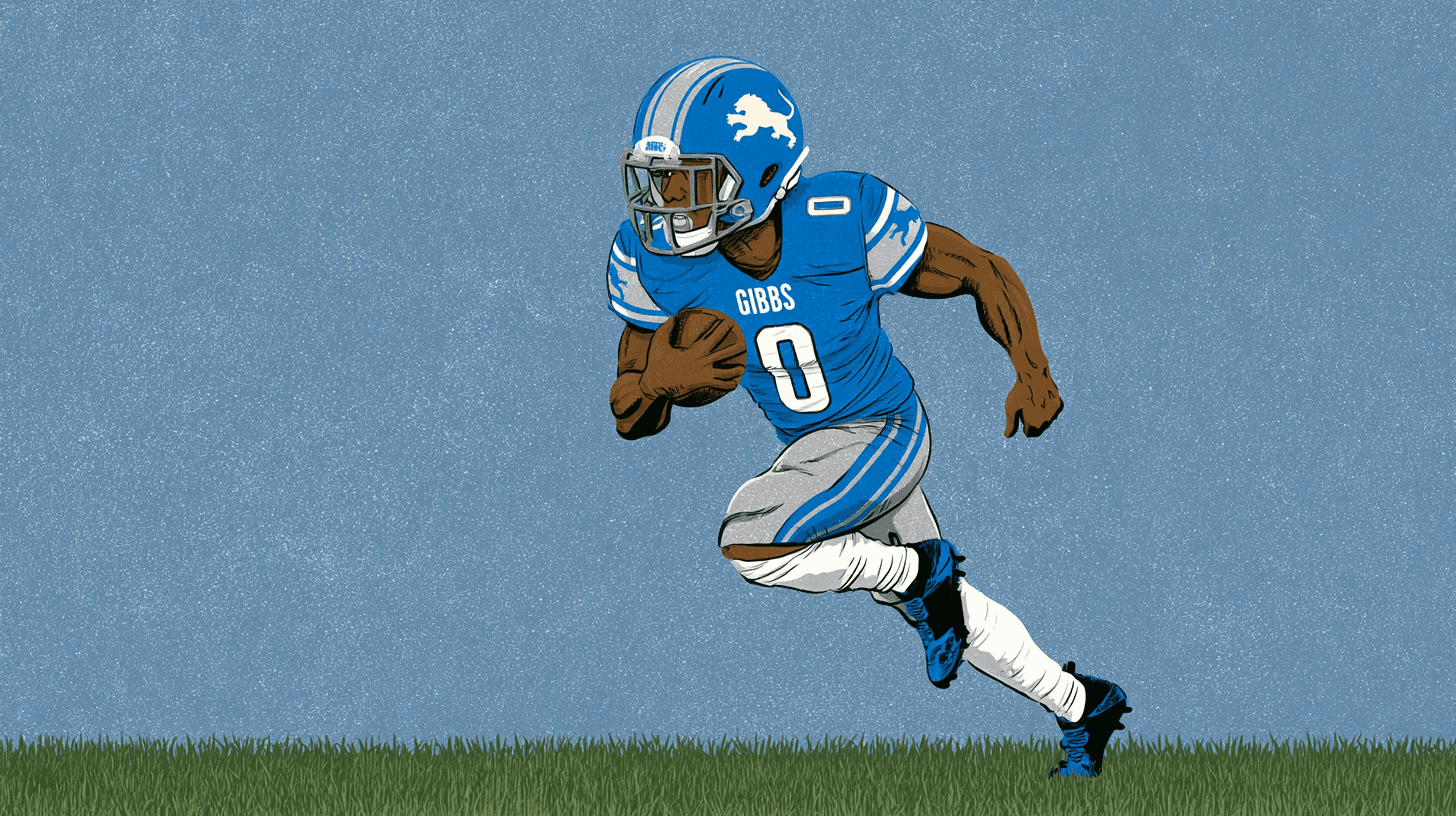
Detroit ended its longest-running summer conversation. The Jahmyr Gibbs contract extension came together at three years and $67.5 million, a deal that can climb to $75.75 million and carries $51.5 million in guarantees, and with it the Lions closed the book on a hold-in that had been sitting on the camp tracker alongside Vita Vea and Tuli Tuipulotu.
That is $22.5 million a year for a running back. Read it twice, because the position spent most of the last decade being told it was a commodity.
What is Jahmyr Gibbs' new contract with the Lions?
The structure is the story. Detroit did not stretch this over five or six years to bury the cap hits and pray. They went short and heavy, which is how you pay a player you actually believe in rather than a player you are hedging on.
| Term | Figure |
|---|---|
| New years | 3 |
| Base value | $67.5M |
| Maximum value | $75.75M |
| Guaranteed | $51.5M |
| Average per year | $22.5M |
Guarantees at $51.5 million against $67.5 million in base value means roughly three-quarters of the deal is real money rather than the kind of back-end air that makes a headline number look prettier than it is. Word came through his camp, and the framework was out before the day was over.
Why did Detroit pay a running back that much?
Because of what Gibbs is, which is not really a running back in the 1997 sense of the word. He came out of Alabama as the 12th pick in 2023 with a receiving profile that made him a matchup problem before he ever took a handoff, and Detroit has used him accordingly. He is a chunk-play generator who happens to line up in the backfield.
He is also, and this is the part that makes the number remarkable, not a bell cow. He shares that room with David Montgomery. The Lions just made a committee back one of the highest paid at his position in football, which tells you they are paying for touches per snap and explosiveness, not volume.
checked the almanac: when christian mccaffrey signed his extension in the spring of 2020, $16 million a year was the absolute roof for a running back and plenty of people thought it was a mistake. six years later a back who splits the workload cleared that by six and a half million. the position did not die. it just got choosier about who it pays.
There is a front-office pattern here too. Detroit has already committed long-term money to Penei Sewell, Amon-Ra St. Brown and Jared Goff. This regime does not let its own draft picks reach the open market and then go shopping for replacements. They identify, they draft, they pay. Gibbs is the next name in that line, and the hold-in never turned ugly, which is its own quiet endorsement of how that building runs.
What comes next for Gibbs and the Lions
He practices. That is the immediate and least glamorous consequence, and it matters more than the dollar figure to the coaching staff. A hold-in costs a player reps and timing in an offense built on both, and the calendar for getting that back is not infinite.
The longer view is about the rest of the league. Every agent representing a dual-threat back just added a data point, and the two remaining names on that hold-in tracker are watching a team prove it will go short and heavy for a player it values. Whether Tampa Bay and the Chargers see Detroit's structure as a template or a warning is the next thing worth tracking.
What I am watching from here: how quickly Gibbs is back in full team work, and whether Detroit's split with Montgomery shifts at all now that one of the two is being paid like a centerpiece. Money changes usage more often than coaches admit.