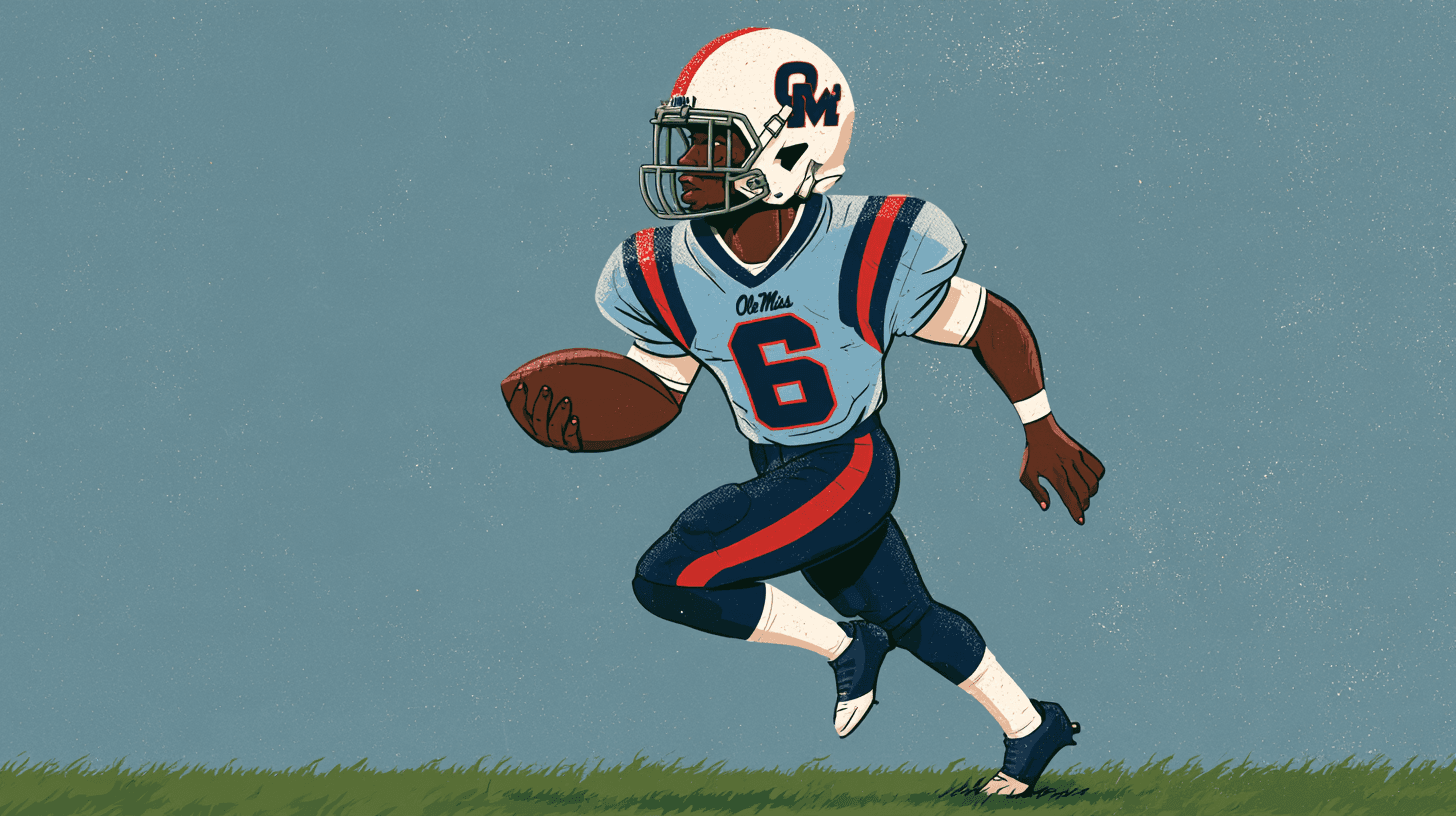
Ole Miss is No. 4 in the new AP poll after beating LSU, and the SEC AP Top 25 headcount is now ten. Ten teams out of twenty-five spots, from one conference, in the third week of September. Whatever you think of poll voters, that is a statement written in ballots.
The detail I keep circling back to isn't the Rebels' jump. It's that LSU lost and stayed in the top 10. Voters looked at that game and decided the loser was still one of the ten best teams in America. You don't get that treatment for losing a road game in November. You get it when the electorate has already decided the league is the deep end of the pool and everybody swimming in it gets graded on a curve.
Why does the SEC have 10 teams in the AP Top 25?
Because the non-conference slate went almost entirely the league's way, and the poll is a memory machine. Voters saw a dominant September out of the SEC before conference play really sank its teeth in, and now every intraleague result is being read as two good teams rather than one good one and one fraud. Florida and Mississippi State both cracked the rankings this week. That is the leading edge of the same logic: if the league is great, the middle of the league must be pretty good too.
The projection crowd is already downstream of it. The word out of the national desk is five SEC teams in the College Football Playoff field. In Week 3. I'd hold that thought loosely, because September polls have a long and colorful history of being wrong about October, but the direction of travel is unmistakable.
What Ole Miss beating LSU actually changed
The Rebels came into the weekend eighth and left it fourth. That is four spots off a single result, which tells you the voters had them queued up and waiting on a scalp. Now they carry the burden that comes with it: a top-five team in that league doesn't get a quiet month. Every remaining opponent has the calendar circled.
For LSU, staying in the top 10 after a loss is a gift and a trap. The gift is obvious. The trap is that the next slip won't be cushioned, and the conversation around that program right now runs hot in both directions. The talk-show set spent the same night the Rebels won arguing about where Lane Kiffin ranks among the people who've ever coached this sport. That's the temperature LSU is living at.
The Kentucky result nobody saw coming
Bury this one and you miss the most interesting three weeks any team has had. Kentucky rolled Youngstown State, had Alabama genuinely nervous at home before the thing came apart late, then went to College Station and won. ESPN's FPI moved them fifteen spots. Fifteen. A computer doesn't get caught up in the moment, so when the model swings that hard it means the road win rewrote how it understood the roster.
That's the part of a ten-ranked-teams weekend that actually matters. Not the top five. The proof that the bottom half of the league can go take one.
checked the almanac: the SEC won seven straight BCS national titles from 2006 through 2012, Florida to LSU to Alabama and back around. we have been here before. it did not feel normal then either.
What comes next
The thing I'm watching is whether ten holds. It almost never does, because conference play is a machine designed to knock teams out of polls, and every SEC-versus-SEC Saturday from here subtracts one. The honest test of whether this league is as deep as the ballots say isn't the count today. It's the count in the second week of November, after they've spent six weeks eating each other. That's when we find out if this was greatness or just a very good September.