
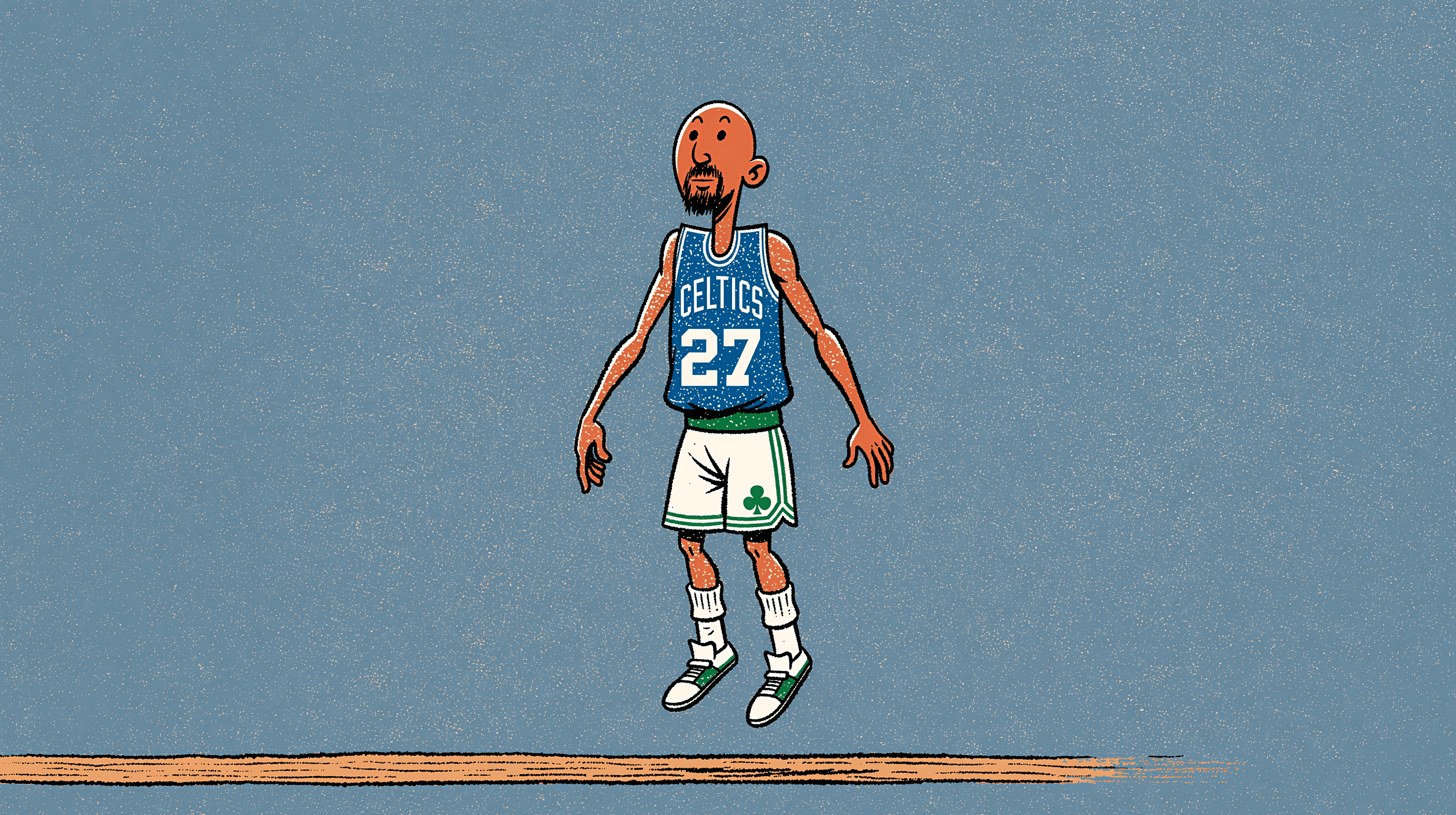
The Boston Celtics have agreed to a three-year extension with forward Jordan Walsh, locking him into the franchise through the 2029-30 season. The structure: Boston first exercised Walsh's $2.4 million option for next season, then layered on the three-year extension on top of that, worth a reported $15-16 million depending on which wire you trust. The deal kicks in for the 2027-28 season. For a 2023 second-round pick who made himself into a real rotation piece on the defensive end, that is a legitimate outcome.
This is not a board-mover. Let's be honest about that up front. Walsh is not Jayson Tatum, not Jrue Holiday, not the name that sends futures traders scrambling. But front-office decisions have a texture to them, and this one has a good feel.
Why This Touches Boston Celtics Odds at All
The betting market prices futures on roster continuity as much as talent level. What Boston has done here is quietly close a window of uncertainty. Walsh carved out real defensive minutes on a championship-caliber team, and cheap, controllable defenders who fit a system are exactly the pieces that front offices lose and then regret. Getting him locked up at roughly $5 million per year through the extension years is team-friendly money for a player who has already proven he belongs.
For the Celtics' title odds, the mechanism is subtle but real: depth stability on a contender is a compounding asset. Every time a team loses a quality depth piece to a bigger offer elsewhere, the front office has to spend more, use an asset, or carry a weaker roster into a long playoff run. Boston avoided that conversation with Walsh today. That is not glamorous, but that is how rosters are actually built.
On player props, there is something worth watching here too. If Walsh's role expands in year two of this deal, the books will eventually need to set points and minutes lines for him. Right now those props, when they exist at all, sit in thin-market territory where the edges tend to be real. Nothing to act on yet, but worth noting when those numbers surface.
What Would Actually Move the Number
For Boston's championship futures to shift meaningfully, the market needs bigger news: a star addition, a key injury, or a departure. The Walsh extension is organizational housekeeping done right, not a roster earthquake. If you are holding Celtics futures at a number you like, this does not change the math in a way that demands action either direction.
What I am watching next is whether Boston uses the roster clarity here as a platform for a bigger move. Teams that handle their depth efficiently tend to also have the cap flexibility and front-office bandwidth to strike when a real opportunity shows up. Nothing confirmed, nothing rumored with substance, just the pattern.
checked the almanac: second-round picks who stick, sign extensions, and become long-term pieces on contenders are rarer than the market appreciates. they usually get squeezed out before year four. walsh avoiding that fate is genuinely worth noting.
The honest read: this is a low-key good day for Boston's front office. Competent roster management does not get headlines, but it is the substrate underneath every championship run. The futures board likely holds steady. The Read, not a tip.