
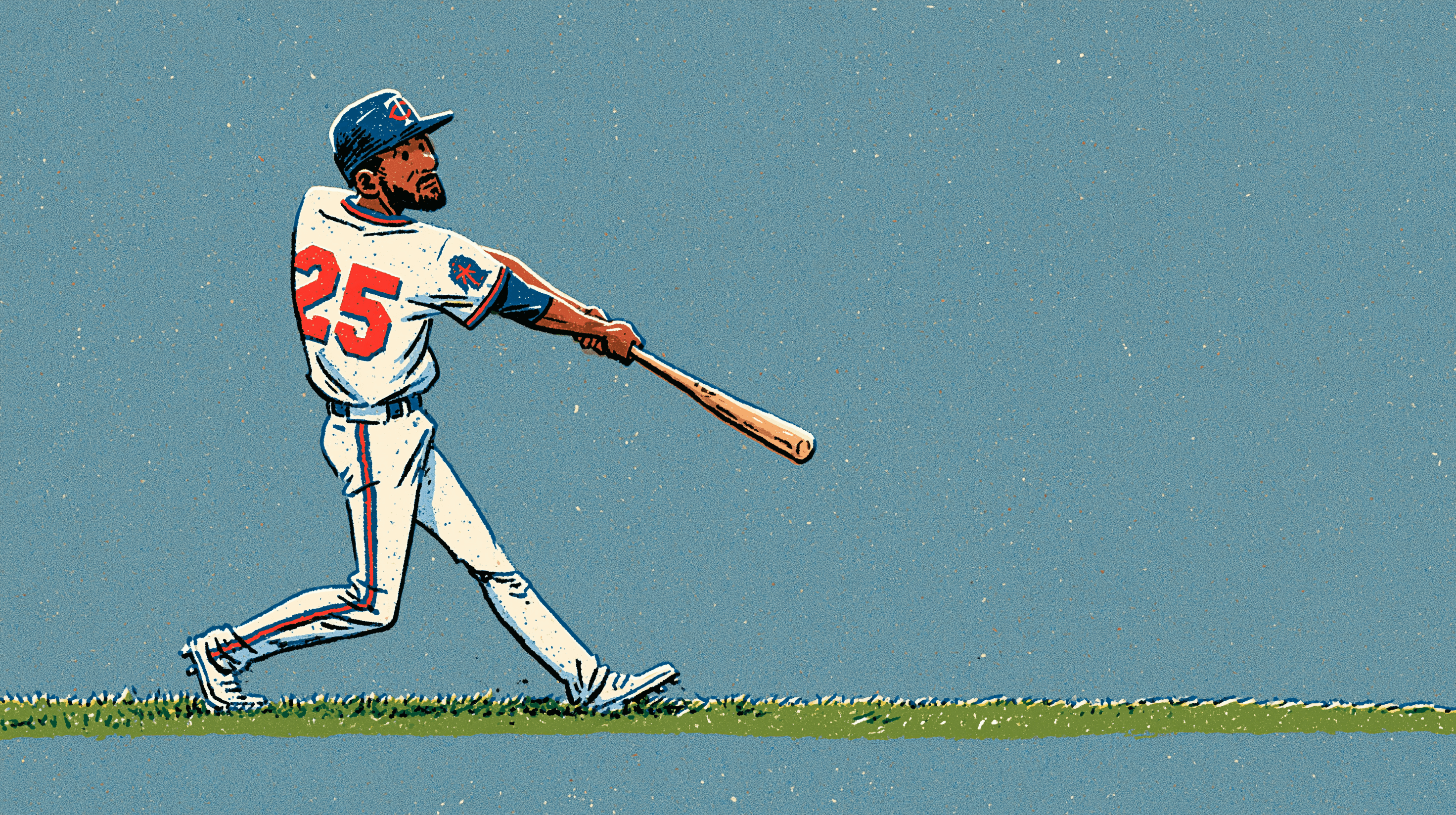
The moment you hear the crack off Byron Buxton's bat, or watch him take a route in center field that looks like he solved a geometry problem nobody else could even read, you understand what's at stake every time he's on the injured list. He is that kind of baseball player. The once-in-a-generation kind you drive to the park to see, not the broadcast, the park. The Twins activated him Monday after a nine-game absence with a right hip strain, and my first reaction was relief, the same relief you feel every single time this happens. My second reaction was a quiet, complicated feeling I suspect a lot of Minnesota fans know well.
Here's the take, plain: the Twins need to stop wrapping Buxton in bubble wrap and just let him be the player he is.
The Case That the Numbers Already Make
Buxton has 25 home runs on the season, good for sixth in the majors. Let that settle for a second. A center fielder, one of the most demanding defensive positions on the diamond, sitting sixth in baseball in home runs. That is not a depth-chart curiosity. That is a genuine MVP conversation piece, the kind of production that reframes what a roster can do and what a front office has to protect at the trade deadline. The Rays and Yankees are already circling the Twins' veterans, scouts in the building, deadline pressure building. The one name that stays off that board, presumably, is Buxton's. He is the argument that Minnesota belongs in a different category.
And yet, nine games on the shelf. Again. Because the human body does not negotiate, and a hip strain is a hip strain.
The Almanac Whisper
checked the almanac on this one, and the pattern is older than the Metrodome. there have always been players whose gifts were so large that the baseball gods seemed to tax them for it, a toll collected in pulled muscles and missed weeks and what-ifs. the truly great ones, the ones who lasted, either found a way to manage the body or played through it and let the career arc sort itself out. buxton is already deep into that story, and nobody is sure yet which version he is writing.
The Honest Counterpoint
I am going to be fair, because that's the deal here. The Twins' medical and training staff are not villains. They are professionals managing a real and recurring injury history on a player whose value to the franchise is enormous. Nine games is not a panic button; it is a calibrated decision. A hip strain that becomes a hip surgery is a nightmare, and organizations have an obligation to their investment and, more to the point, to the player's long-term health. You do not blow up a knee or a hip chasing a Wild Card in July. That case has real merit.
But there is a version of overcaution that becomes its own kind of disservice. If Buxton spends the second half of his prime sitting out hip strains that would have an average player in the lineup inside of three days, the Twins are not protecting him. They are watching him.
What This Means for the Second Half
| What Changes With Buxton Active | What It Means |
|---|---|
| Middle-of-the-order protection | Opposing pitchers cannot pitch around the lineup as easily |
| Sixth in MLB in home runs | MVP conversation stays alive for Minnesota |
| Elite center field defense | Pitching staff plays differently with that range behind them |
| Trade deadline optics | Minnesota signals it is a buyer, not a seller |
With the deadline approaching and AL East money circling Minnesota's veterans, the Twins need Buxton to be the reason the front office can afford to keep, not trade, the pieces around him. That math only works if he is in the lineup.
For the Love of the Game
Here is where I land. Baseball has a shortage of players who make you put your phone down. Not because you feel obligated, but because something is happening that your brain registers as rare. Buxton, when healthy, is that player. The range in center field. The home run swing that looks almost confused by the distance it produces. The speed that still makes veteran runners look like they are running through sand.
The Twins owe it to themselves to let that breathe. Not recklessly, not through the kind of pain that ends careers. But with a bias toward playing, not toward preserving. Because the version of Byron Buxton we get when he is on the field, the real one, the one who is sixth in the majors in home runs and makes every outfield look small, is worth more than any careful management plan ever written on a whiteboard.
He is back. Let him play. Watch him. That is what the game is for.