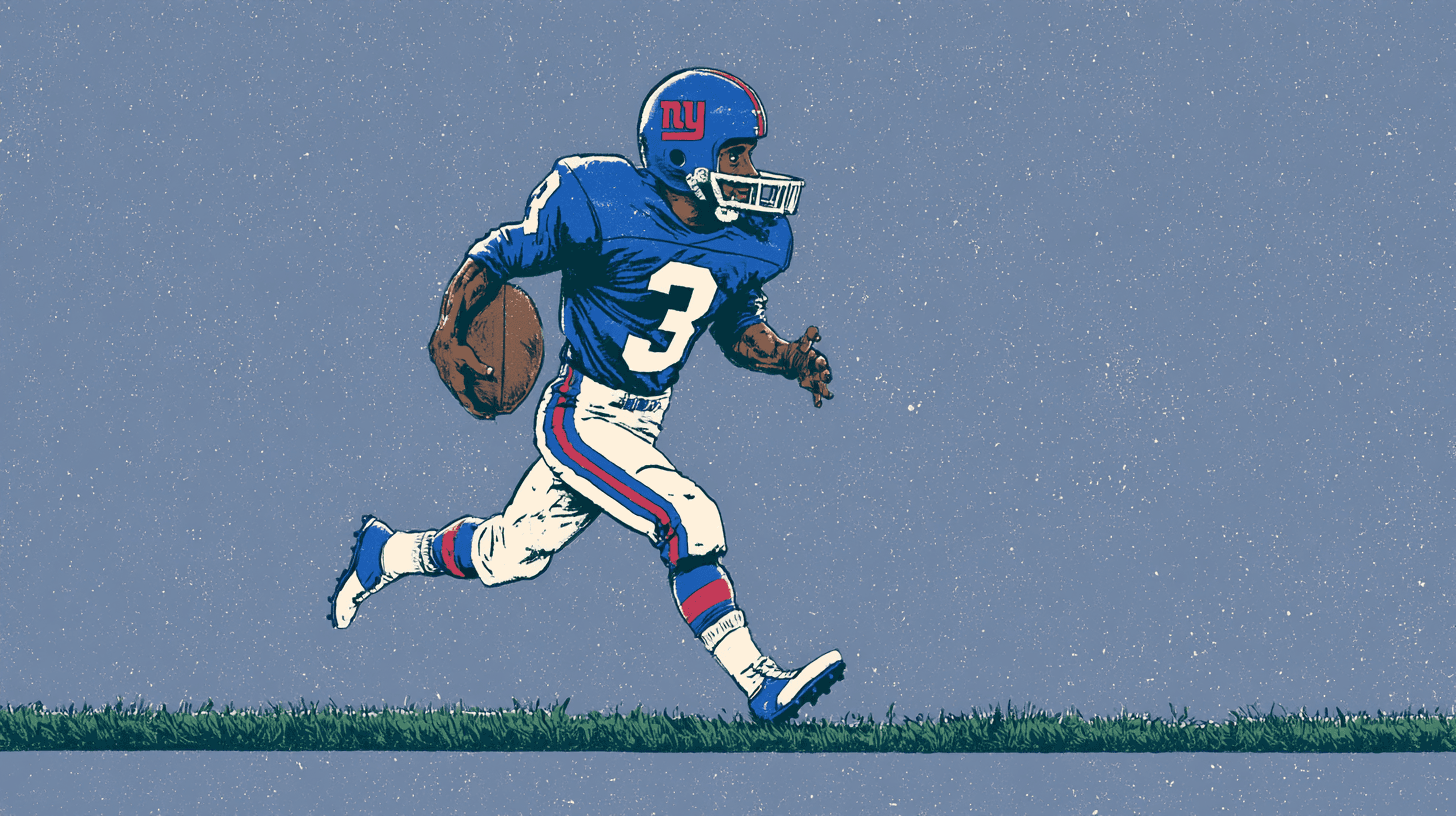
The New York Giants acquired defensive tackle CJ Okoye from the Baltimore Ravens on Saturday, and the price was a 2028 seventh-round pick. That is the smallest bill in the NFL wallet, and it still tells you something: New York wanted this player on their roster badly enough not to risk the waiver wire.
That is the whole trade. No conditions reported, no swap of bodies, no future considerations. One late pick, two drafts down the road, for a big man on a defensive line room that is being pared down to its final shape right now.
Why the Giants acquired CJ Okoye instead of waiting on waivers
This is the mechanism worth understanding, because it is the only reason a seventh-round pick in 2028 has any value at all this weekend.
The league is in the middle of its annual roster compression. Teams are required to cut down to 53, which means each club is shedding 37 players and the league as a whole is moving north of 1,100 names in about 48 hours. Every one of those cuts hits the waiver wire in reverse order of last season's standings. If Baltimore had simply released Okoye, any team with a worse record than the Giants gets first crack at him, and New York gets whatever is left.
So you pay. A 2028 seventh is the cost of skipping the line. Teams do this every August with players they have quietly liked from film all summer, and the fact that Baltimore was willing to take the pick rather than keep him tells you the Ravens' interior line room is full.
I will be straight with you: I do not have Okoye's full preseason snap log in front of me, and I am not going to pretend a stat line I have not seen. What I have is the transaction, the price, and the timing. In this business, that is often the honest ceiling on a Saturday in August.
What the trade says about both defensive lines
For the Giants, this is depth insurance on the interior, the least glamorous and most quietly load-bearing job on a defense. Nobody buys a jersey. Everybody notices when the guy is not there in Week 12 and the A-gaps turn into an airport terminal.
For Baltimore, it is a numbers game and nothing more sinister than that. The Ravens have made a habit of running a deep, well-stocked front and letting the roster math sort itself out. They found a team willing to hand over a pick for a player who was going to be the odd man out anyway. That is good housekeeping, not a fire sale.
checked the almanac: the draft has only had seven rounds since 1994, when the league trimmed it down from eight. so the currency being spent here is, historically speaking, the newest and cheapest coin in the drawer. teams trade them like loose change and every so often one of them turns into a starter.
What comes next for CJ Okoye and the Giants roster
The thing I am watching is the 53. Not the trade itself, the trade is done. What matters is whether Okoye is on New York's final roster when the cuts are official, or whether he is a body acquired to survive the weekend and then gets moved to the practice squad if he clears. A team that spends a pick usually intends to keep the player, but August intentions and September rosters are two different documents.
After that: the rotation. Interior linemen live or die by snap share, and the first real tell will be how many snaps he takes with the ones once the games count. That is the number that turns a seventh-round trade into an actual football story.
The rest of this weekend belongs to the churn. Over a thousand transactions, a few hundred careers changing direction, and one big man who just got told to pack for New Jersey.