
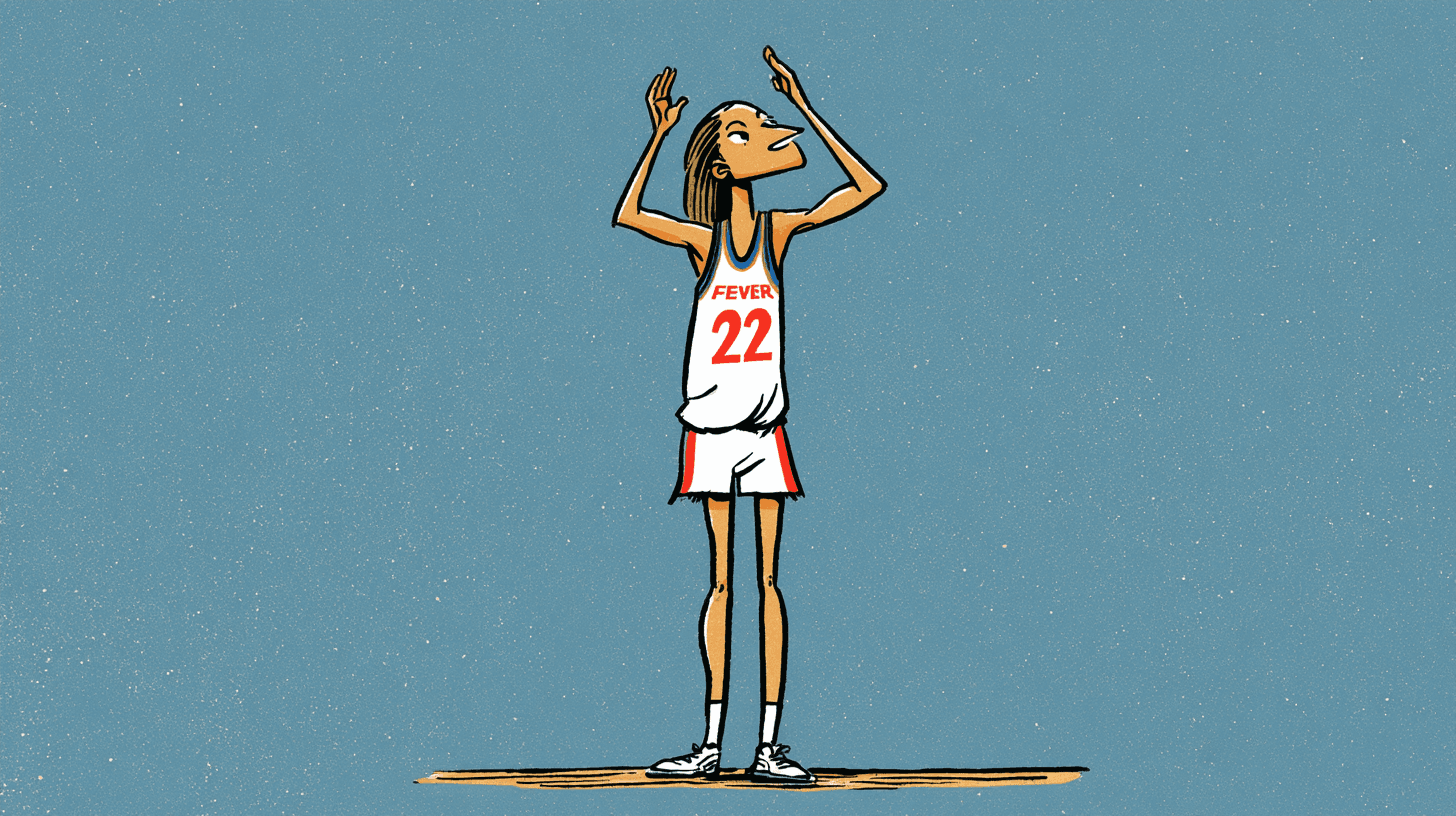
The Caitlin Clark media wars claimed another participant this week, and this one spent 34 years inside the biggest sports network in the country. A longtime ESPN anchor posted in support of the Indiana Fever guard on her personal account, and within about a day she was no longer commenting on the story. She was the story.
Here is the sequence, plainly. The anchor took Clark's side publicly. A former colleague questioned her sudden focus on Clark and on the WNBA. The anchor fired back, pointing to her own past work covering the league and noting that more than three decades of network restrictions had kept her actual opinions off the record. Then she summed the whole thing up herself: "I struck a nerve." She also described herself as now being part of the Caitlin Clark media wars, which is the kind of sentence that reads like a joke and functions like a weather report.
What makes this more than a spat between two broadcasters is the thing underneath it. The callout was not really about Clark. It was about standing. Who earned the right to talk about this league, and when did they show up. That is an old and legitimate sore spot for the people who covered the WNBA when the arenas were two-thirds empty and the highlight package was a courtesy.
checked the almanac: the league tipped off in 1997 with national television from the jump, NBC, ESPN, and Lifetime all carrying games. so the story that the WNBA was invisible until recently was never quite true. it was just quiet.
Both things can be right. The anchor is telling the truth that company guidelines flatten a broadcaster into a voice rather than a person, and that being freed from them is genuinely disorienting. The colleague is also asking a fair question, which is where the posts were before Clark arrived. Nobody in this exchange is the villain. That is exactly why it will keep going.
The part I actually worry about is the residue. Clark did not start this argument and neither did her teammates, and the way these media fights usually resolve is that a player gets a microphone pushed at her locker and is asked to referee two broadcasters she has never met. That is what I am watching next: whether this stays a media-row story, or whether it lands on the Fever the way most of the Clark discourse eventually does.